
Guide
Black Flare Jeans Crocking Test Guide: Buyer Checks
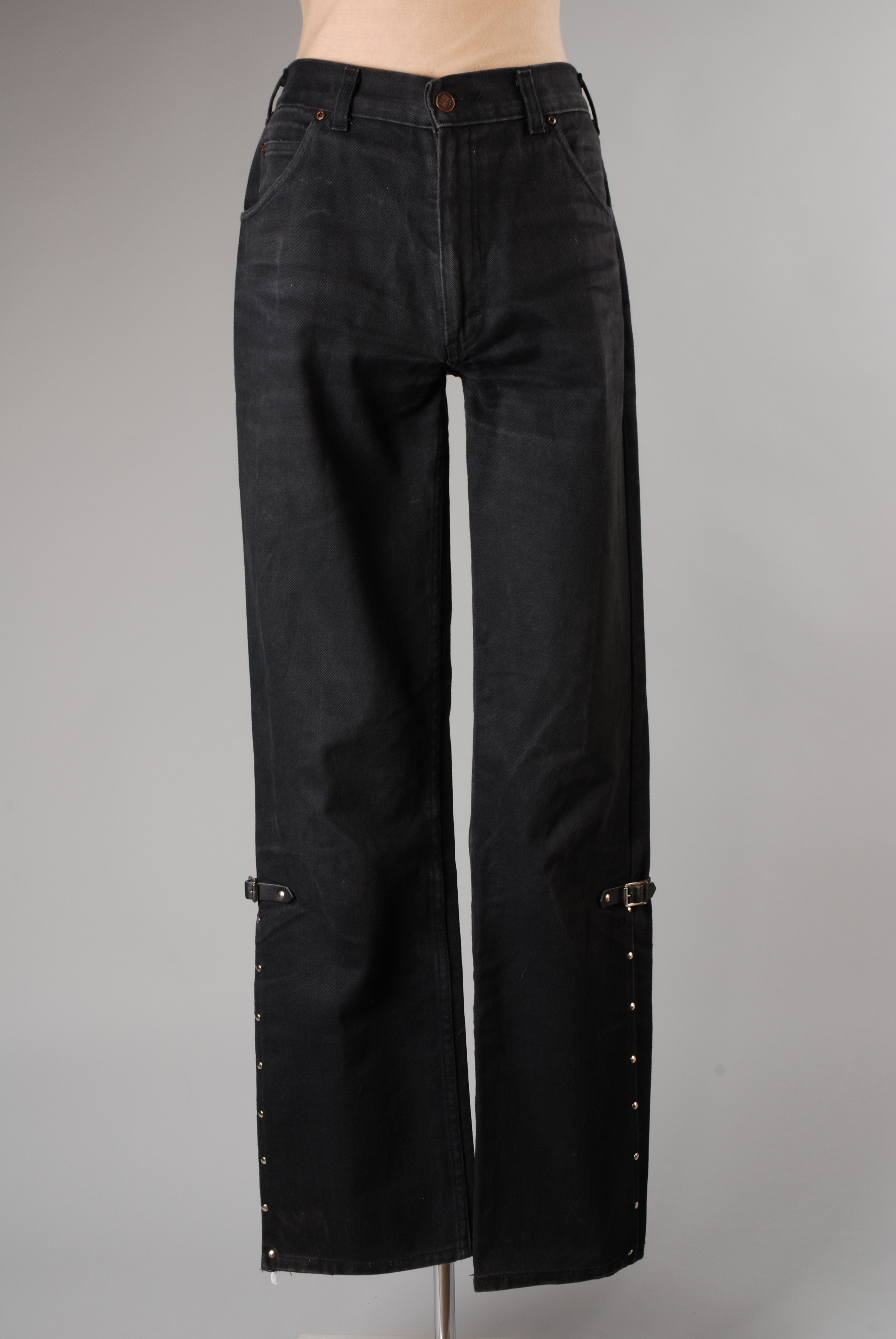
Start With The Crocking Method
A black flare jeans crocking test guide should start by naming the method, not just saying the fabric was rub tested. AATCC TM8-2016e(2022)e is titled Colorfastness to Crocking: Crockmeter, and uses white test cloth squares dry and wet with water. Ask about it when black flare jeans men may contact shoes, seats, or light tops.
TM116 is the alternate method for areas too small for a standard AATCC Crockmeter. AATCC TM116-2018e(2022)e is Colorfastness to Crocking: Rotary Vertical Crockmeter, technically equivalent to ISO 105-X16, and uses test squares dry or wet with water or other liquids. Ask why TM116 was selected for a small or printed area.
Demand Dry And Wet Results
Dry crocking and wet crocking answer different buyer questions. Dry results speak to normal friction. Wet results matter when humidity, rain, sweat, cleaning, or damp wear can move unfixed dye. A guide for men's black flare jeans should show both or mark the missing result as (not visible).
Heavy black and indigo shades can be difficult in wet rubbing. One study tested 6% o.w.y. Indigo and 15% o.w.y. CI Sulphur Black 1, and states that wet crocking at heavy shade depths cannot overcome 1-2 on the gray scale for staining under AATCC 8. Use that as risk context, not a universal pass/fail rule.
Read The Rating Tools
A result is hard to compare unless the rating tool is named. AATCC TM8 names the Gray Scale for Staining and the Chromatic Transference Scale. The gray-scale pack also names AATCC EP1 and EP2 as evaluation procedures.
Ask whether scale condition was documented. AATCC's gray-scale guidance mentions gloves, protective sleeve storage, and yearly replacement. That detail helps when comparing black bell bottom jeans men across lots or suppliers.
Document The Lab Environment
Lab conditions should be visible before a buyer treats the result as comparable. NC State's Physical Testing Lab FAQ cites ASTM D1776 conditions of 21 +/- 2 degrees Celsius, 70 +/- 4 degrees Fahrenheit, and 65% +/- 5 relative humidity. It also performs ASTM and AATCC test standards.
Those numbers do not prove a specific WBestWind jean was tested. They show the environment data a proper report should disclose. Public WBestWind lot-level fabric certificates, wash-count data, dye chemistry, and AATCC TM8/TM116 results are (not visible).
Connect Results To Wear Risk
The buyer problem is not abstract colorfastness. Levi's names light-colored bags or purses, white sneakers and shoes, light upholstery such as couches and car seats, and other clothing as dye-transfer risk items for dark denim shades including blue, black, or gray. It also says transfer lessens as jeans are washed and worn, while treating dye transfer as outside its defect policy.
Care steps should be framed as risk reduction, not a guaranteed dye fix. Levi's lists washing before first wear, turning jeans inside out, using cold water, washing alone or with dark items, skipping fabric softener, and air drying. Better Homes & Gardens describes a home screen using 1 tsp. detergent in 1 cup of lukewarm water for 2 to 3 minutes. That can flag risk, but it is not an AATCC lab report.
Use The Guide Before Buying
For men's black flare jeans, ask for the method version, sample area, dry result, wet result, liquid used, rating scale, lab environment, and finishing treatment. Garmon's black sulphur denim example used a desized and stone washed garment, 97% cotton, 3% elastane, 360 gr/mq (10,5 oz), and dipping at the recommended dosage; it claimed dry crocking improved by 2.5 points and wet crocking by 2 points.
That detail is more useful than broad reassurance. The pack does not prove that flare-leg geometry or hem width increases crocking risk versus other jean fits. Treat this guide as a checklist when the garment may touch pale footwear, upholstery, bags, or tops.
Frequently asked questions
What should buyers check when using a black flare jeans crocking test guide?
Check the AATCC method version, dry and wet results, test cloth or liquid, rating scale, lab conditions, sample area, and whether the result is lot-specific.
Is AATCC TM8 enough for men's black flare jeans?
AATCC TM8 covers dry and wet crocking with white test cloth squares. AATCC TM116 is relevant when the area is smaller than possible with the standard TM8 Crockmeter or when other liquids are used.
Do black bell bottom jeans men have a universal passing crocking grade?
A universal pass/fail AATCC TM8 or TM116 grade for D2C black flare jeans is (not visible). The sources define methods and tools, while brand or buyer thresholds vary.
Can a home colorfastness test replace an AATCC lab result?
No. A home screen with 1 tsp. detergent in 1 cup of lukewarm water for 2 to 3 minutes can flag dye risk, but it does not replace AATCC TM8 or TM116 documentation.
How should buyers reduce dye-transfer risk before first wear?
Use care steps as risk reduction: wash before first wear, turn jeans inside out, use cold water, wash alone or with dark items, skip fabric softener, and air dry.
Sources
- TM008 Test Method for Colorfastness to Crocking: Crockmeter
- TM116 Test Method for Colorfastness to Crocking: Rotary Vertical Crockmeter Meth
- The AATCC Gray Scales Just Got Edgier
- Physical Testing Lab FAQ
- Dark Denim & Dye Transfer: What to Know & Our Policy
- Color Fastness to Crocking Improvement of Indigo and Sulphur Dyed Cellulosic Fibres
- Fst Control: Rule Wet Crocking Fastness
- What Is Colorfastness? How to Test for It on Clothes and Linens