
Guide
Men's Corduroy Bell Bottoms Wale Count Guide
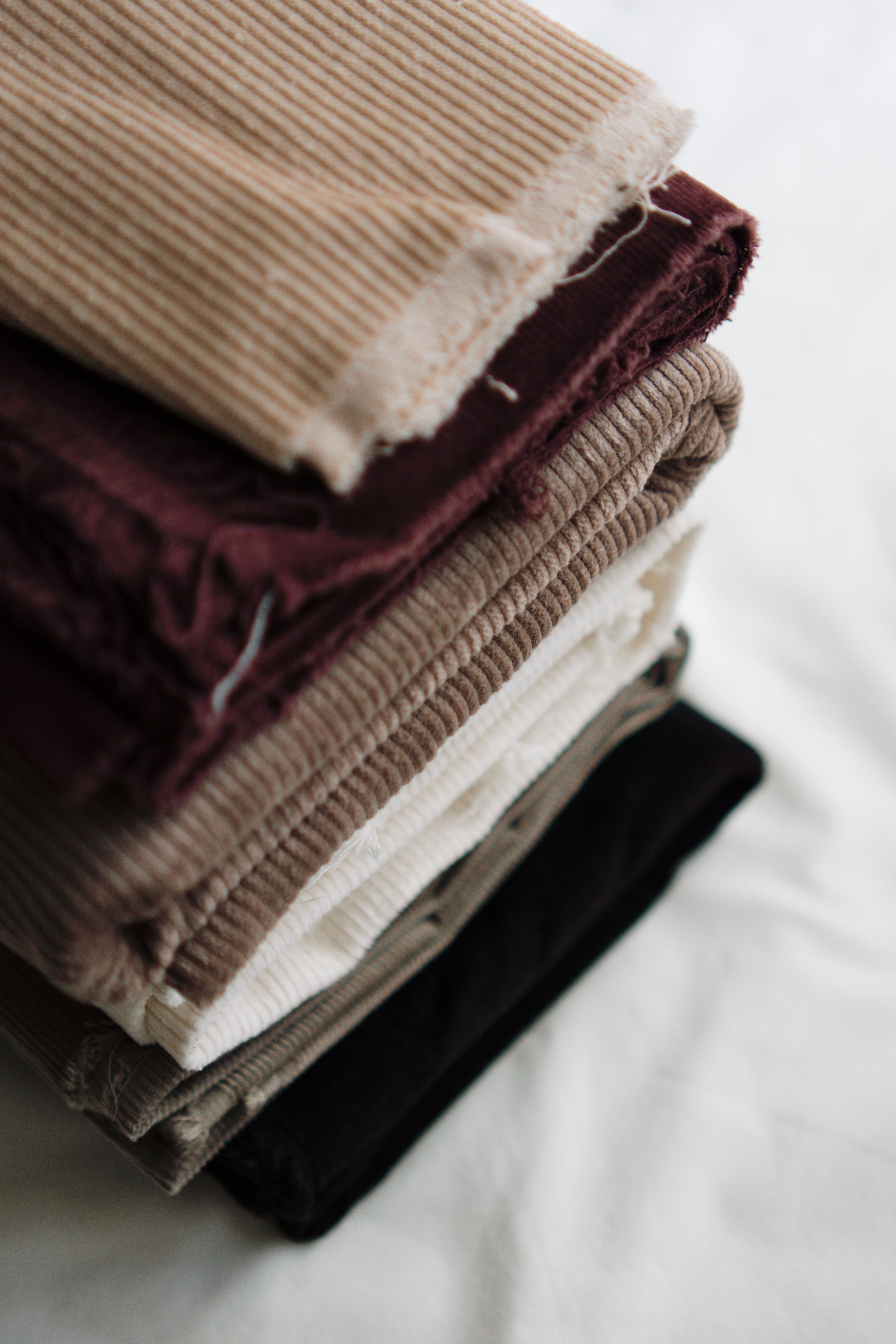
Read The Number Before The Wale Name
A men's corduroy bell bottoms wale count guide starts with one measurable detail: wale count is the number of lengthwise pile ridges in one inch of fabric. Lower numbers indicate wider, chunkier cords; higher numbers indicate narrower, finer cords. This inverse relationship is more useful than descriptions such as chunky or subtle because it gives buyers a number to compare.
Use category names as orientation, not as a universal standard. The Cotton Incorporated consumer guide lists broad wale at 3-5 rows per inch, wide wale at 6-10, regular wale at 14, pinwale at 16-23, and feathercord at 20-25. CottonWorks defines fine wale as 16 or more wales per inch. Another manufacturer places standard corduroy generally at 8-13 and commercial corduroy around 1.5 to 21 or more. The cited sources do not identify a standards-body taxonomy that resolves those overlaps.
Match Ridge Scale To The Intended Look
For men's corduroy bell bottoms, the count is primarily a surface-scale specification. A 3-5 broad wale exposes large channels, while a 20-25 feathercord creates a denser field of narrow ridges. Menswear coverage describes wide-wale pants as falling in the 3-to-8-wales-per-inch range, which helps connect fabric terminology to current shopping language.
That visual distinction should not become an unsupported performance promise. The cited sources provide no measurement showing how 5, 8, 11, 14, or 20 wales per inch changes the drape, break, hem swing, or movement of a flared trouser leg. Buyers can choose a visible ridge scale, but they need garment photos, measurements, or test data from the seller to assess the flare behavior of an exact style.
Pair Wale Count With Fabric Weight
Wale count does not tell the whole material story. One retail example of 11-wale standard corduroy is 100% cotton, 295 GSM, 0.70 mm thick, and 58/59 inches wide. Its vertical pattern is listed as 1/8 inch, with 11 wales per inch, and the fabric weighs approximately 14 ounces per linear yard. These figures describe one fabric, not every 11-wale corduroy.
An 8-wale manufacturer example shows why buyers need the complete specification. That fabric is 99% cotton and 1% spandex, weighs 330 G/SQM, measures 56/57 inches wide, and is listed for pants among other uses. The lower wale count and higher GSM occur together in this example, but the evidence does not establish a universal formula linking count and weight. For corduroy flare pants men buy online, request both figures rather than inferring GSM from ridge width.
Check Fiber Content And Stretch Separately
Corduroy can be made from cotton, polyester, cotton-polyester blends, and constructions containing elastane. Elastane woven into the fabric provides some stretch. Current menswear examples are described as primarily cotton, sometimes blended with polyester or fibers such as lyocell, with elastane or spandex used for stretch. Composition therefore deserves its own line in a product specification.
Do not treat the word stretch as a fit guarantee. The 8-wale example contains 1% spandex, but the cited sources give no stretch percentage, recovery result, or finished-trouser fit test for it. They also provide no equivalent data for WBestWind mens corduroy bell bottoms. A buyer should ask for the exact fiber percentages, stretch direction, garment waist and thigh measurements, and whether measurements were taken relaxed or extended.
Compare Exact Specifications, Not Labels
A useful product listing should name the numeric wale count and composition at minimum. Better listings add GSM or another fabric-weight basis, stretch content, color, finished waist and inseam, knee position, and leg opening. The cited sources support the material fields but do not define a mandatory measurement set for men's bell bottoms. Ask how each garment dimension was measured before comparing two listings.
This approach prevents three common errors: assuming every wide wale has the same count, assuming the same count has the same weight, and assuming visible texture predicts movement. If a listing says regular wale without a number, request the count because published ranges overlap. If it gives only a count, request composition and weight. If it promises a particular swing or drape, request exact-style evidence rather than extending a general corduroy definition to that garment.
Use A Short Buyer Checklist
Record the exact ridges per inch, then compare that number with published wale categories while allowing for differences between sources. Check the fabric weight, thickness if supplied, and complete fiber percentages.
Confirm whether the fabric contains elastane or spandex and whether the listing provides stretch or recovery results. Then review the finished-garment measurements and clear front, side, and back photos of the flare.
Use those details to compare products without assuming that wale count predicts warmth, durability, breathability, drape, hem swing, or break. If a listing leaves a detail out, ask the seller for it before choosing a pair.
Frequently asked questions
What should buyers check first in a men's corduroy bell bottoms wale count guide?
Check the exact number of ridges per inch first. Then verify GSM or fabric weight, fiber percentages, stretch content, and finished-garment measurements.
Does a lower wale number mean finer corduroy?
No. Lower numbers mean fewer, wider, chunkier cords per inch. Higher numbers mean more, narrower, finer cords.
What counts as wide-wale corduroy?
One Cotton Incorporated guide lists wide wale at 6-10 rows per inch, while recent menswear coverage describes wide-wale styles as typically 3-8. Ask for the exact count because published terminology varies.
Is 11-wale corduroy suitable for trousers?
The pack includes one 11-wale, 100% cotton example at 295 GSM and 0.70 mm, plus manufacturer guidance associating standard wale with trousers. Suitability for a specific garment still depends on its full construction.
Does wale count predict how men's corduroy bell bottoms swing?
A trustworthy quantified relationship between a specific wale count and flare drape, hem swing, or break is (not visible). Use exact-garment photos, measurements, and test evidence instead.
Sources
- Fine Wale Corduroy
- Cotton Fabrics- Corduroy
- What Is Corduroy Fabric? Wale Count, Fiber Blends, and Uses Explained
- 11 Wale Standard Corduroy Fabric By The Yard
- KLD10080-3 8W Stretch Cotton-Spandex Corduroy Fabric
- Lauren's Guide to Corduroy Fabric for Dressmaking
- 15 Corduroy Pants That'll Give Your Jeans a Run for Their Money