
Guide
Buyer's Men's Flare Jeans 3x1 Twill Weave Guide
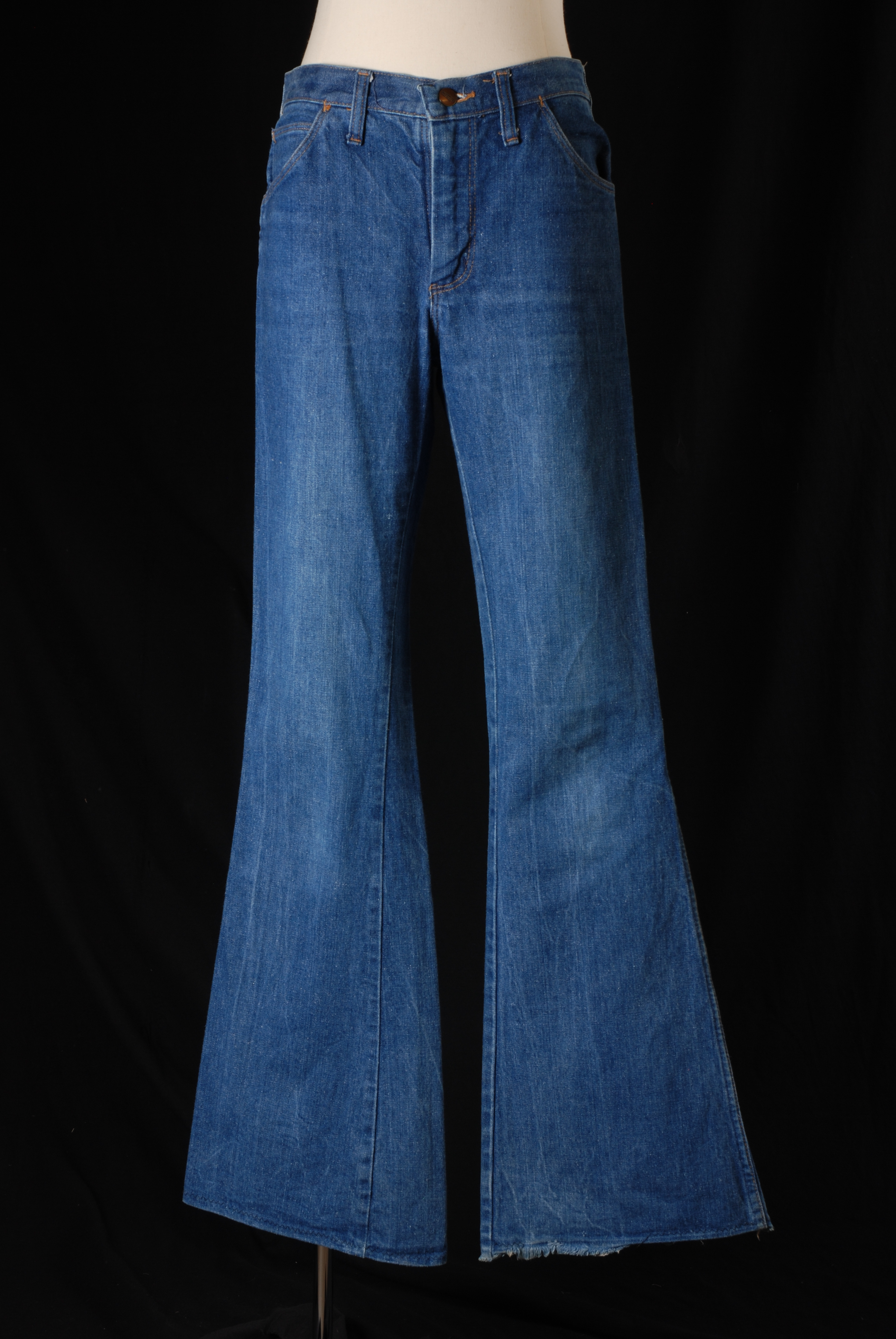
Confirm The 3x1 Repeat
Start with the weave, not the product description. CottonWorks defines 3x1 twill as a fabric repeating on four warp ends and four filling picks. It is warp-faced: each warp-yarn repeat has three warp risers and one warp sinker. In plain buyer language, each warp yarn travels over three weft yarns before passing under the next one.
That four-by-four repeat is the clearest construction check. The notation may appear as 3x1 or 3/1. Do not confuse it with fiber content, weight, color, wash, or leg shape; those are separate specifications. Calling fabric simply twill does not show that it is 3x1.
Read The Warp-Faced Surface
Traditional denim helps make the structure visible. CottonWorks describes denim as a cotton fabric normally woven in 2x1 or 3x1 twill, using warp yarns continuously dyed blue with indigo and filling yarn kept white. Because three warp segments float on the face for every one that sinks, the dyed warp dominates the visible surface.
The longer floats create fewer interlacing points than other twills. CottonWorks links that construction with higher tear strength and heavier bottom-weight fabrics, including denim, chino, and gabardine. This supports a structural comparison, not a guarantee that every 3x1 garment will feel heavy or outperform every 2x1 garment. Yarn, weight, finishing, and garment construction still matter.
Ask For Construction Details
A more technical specification can show how the cloth was organized at the loom. CottonWorks reports that denim-type fabrics usually use reeds with 12 to 18 dents per inch, and standard 3x1 twill denim normally has four warp ends drawn through each dent. The repeat requires at least four harnesses.
Warp ends are the lengthwise yarns; filling picks are the crosswise insertions that complete the repeat. Denim weaving requires four basic motions: shedding, filling insertion, beat-up, and warp control through let-off or take-up. These details can confirm construction vocabulary, but they do not tell a shopper how wide the hem is or where the knee break begins.
Separate Weight, Stretch, And Hand
Next, check weight in ounces per square yard or grams per square meter. Lee explains that lower-weight fabric is more pliable and drapes better, while heavier fabric is usually more durable and wear-resistant. The evidence pack gives no universal best fabric weight for men's flare jeans, so the useful question is whether the listed weight matches the buyer's preference for movement, structure, and wear-in.
Raw denim provides context, not a flare-specific rule. The 3x1 atelier guide says raw denim commonly ranges from 8 to 16 ounces, with 13.5 to 15 ounces typical among denim purists and 14 ounces described as a balance of comfort and wear-in. Its examples also show why the weave label is insufficient: listed fabrics include 10-, 13-, and 14-ounce options, and one 10-ounce example uses 98% cotton with 2% stretch.
Check the fiber line as carefully as the weight. Lee says stretch jeans typically contain 1% to 3% elastane. A small elastane percentage may change movement and recovery, but the pack does not establish the exact effect on any WBestWind garment. Product-level weight, blend, finishing, and performance data are (not visible).
Judge The Flare As A Garment
For flare jeans men are considering, inspect rise, thigh room, knee position, hem opening, and length independently of weave. The supplied sources do not show that 3x1 alone sets those measurements or makes a flare hang correctly. Pattern, weight, blend, finishing, and construction all contribute.
That separation reflects actual buying priorities. Cotton Incorporated's 2024 Global Denim Survey covered 10,183 consumers across 13 countries. Fit was a purchase driver for 87%, comfort for 85%, and quality for 82%; 62% preferred jeans made of cotton. In the same survey, 52% wanted to try jeans before buying, 51% valued finding the right size and fit in stores, and 42% wanted to touch and feel the product.
Use those priorities as a practical sequence for mens flare jeans: confirm the 3x1 construction, read weight and fiber content, then evaluate the garment on body. If shopping online, request a size chart, rise, thigh, knee, inseam, and hem measurements. Exact WBestWind construction and fit specifications beyond the evidence shown here are (not visible).
Frequently asked questions
What does 3x1 mean in men's flare jeans?
It means each warp yarn passes over three weft yarns and under one. The design repeats across four warp ends and four filling picks.
Is 3x1 twill always heavy denim?
No. CottonWorks associates 3x1 with heavier bottom-weight fabrics, but supplied examples range from 10 to 14 ounces and do not establish a universal weight.
Does 3x1 twill make men's flare jeans fit better?
Not by itself. The supplied sources do not prove that weave alone determines fit, comfort, or flare drape; pattern, weight, blend, finishing, and construction also matter.
How much stretch should mens flare jeans contain?
Lee says stretch jeans typically contain 1% to 3% elastane, but the pack provides no universal ideal percentage for men's flares. Check the exact product blend.
What measurements should online buyers request?
Request rise, thigh, knee, inseam, and hem measurements, then compare them with a well-fitting pair. Exact WBestWind product measurements are (not visible).