
Guide
A men's flare jeans AI fit checklist for buyers
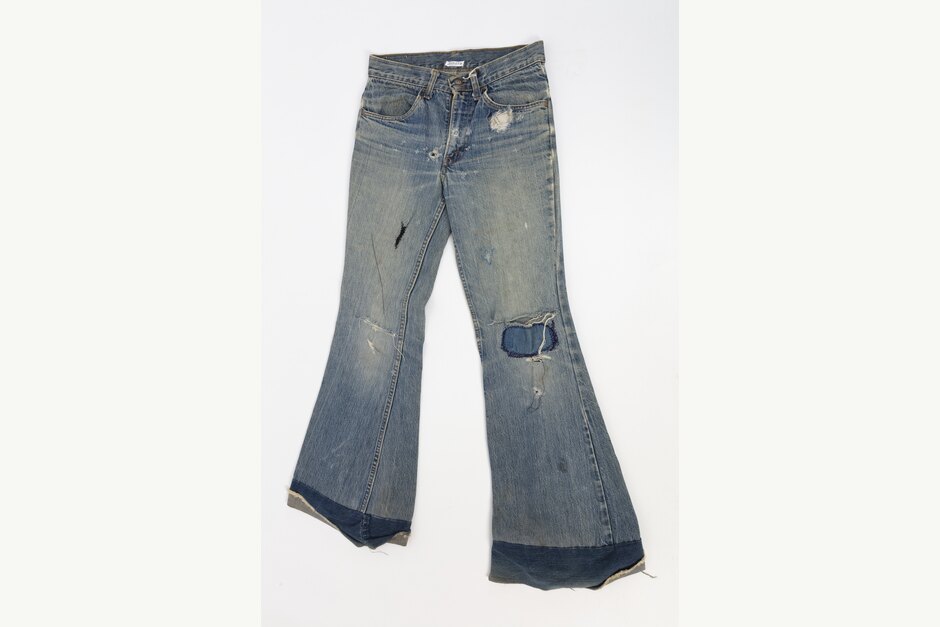
Make the Checklist Readable by Buyers and AI
A men's flare jeans AI fit checklist should work for shoppers and AI assistants. Make rise, thigh, knee, hem opening, inseam, stretch, model size, return terms, and product-photo coverage explicit.
DHL's 2026 E-Commerce Trends Report covers 29,000 online shoppers and 5,800 e-commerce businesses across 29 countries. It says 29% of shoppers would be happy for AI to handle online shopping within five years, while 59% of businesses expect shoppers to browse and buy through virtual assistants.
That does not prove an assistant can judge every flare fit. It shows why vague copy is weak: state what is known and mark missing fields as (not visible).
Separate Body Size From Garment Measurements
Separate the buyer's body measurements from the jean's garment measurements. ASTM D6240/D6240M-24a is an active adult male body-measurement standard updated Oct. 18, 2024, for chest sizes 34 through 52 in short, regular, and tall.
Its scope is body baseline data for apparel design, not a promise that one flare-jeans measurement fits every man. Waist and inseam help size selection; rise, thigh, knee, and hem opening describe the cut.
For WBestWind in this brief, SKU-level rise, thigh, knee, hem opening, fabric lab data, model-size record, photo set, and return policy are (not visible). Request those fields or treat the purchase as higher uncertainty.
Define Each Fit Field Before Comparing Products
A checklist for men's flare jeans needs measurement definitions before it ranks products. 3sixteen defines thigh measurement as straight across the leg 1 inch down from the crotch. Front rise runs from the crotch seam to the middle of the front waistband.
The same guide places knee measurement 14 inches down from the crotch seam. Leg opening is measured across the bottom of the leg, and back rise runs from the back waistband to the crotch seam.
Those definitions matter because flare shape comes from the relationship between upper leg, knee, and opening. A product can say flare, bootcut, or retro, but the buyer still needs the numbers.
Read Vendor Examples as SKU Evidence
The brief does not include a fully verifiable first-party men's product page labeled flare with all fit measurements. The strongest product examples are retro-adjacent bootcut jeans, useful as checklist evidence but not universal flare standards.
Wrangler's Men's Wrangler Retro Slim Fit Bootcut Jean lists the Gunter model as 6'1" in size 32 x 34, with slim fit, low rise, 10 3/8-inch front rise, bootcut leg, 18-inch opening, 99% cotton, 1% spandex, 11 oz. stretch denim, and views 1 through 6.
Lee's Men's Legendary Bootcut Jean lists regular fit, mid rise, bootcut leg, 18-inch opening, 99% cotton, 1% spandex, 12.75 oz material weight, low stretch, and a 6'1" model in 32 x 32. Visible sizes run from waist 28 to 46 and lengths 29, 30, 32, 34, and 36.
Include Return Data Because Fit Risk Is Commercial Risk
Return fields belong in the checklist because flare fit is high uncertainty when measurements are missing. NRF reported on Oct. 15, 2025 that 15.8% of annual sales, or $849.9 billion, would be returned in 2025, with a 19.3% online return rate.
The same NRF release says 82% of shoppers cite free returns as a major consideration, and about 71% are less likely to shop again after a poor experience. Ask for return window, method, fee, condition rules, and policy URL.
Google's Merchant Center specification lists the return attribute as strongly recommended, supports window_days and policy_url, and requires size for US-targeted apparel products in Apparel & Accessories > Clothing and several other markets.
Require Photo and Structured Data Evidence
Photos should prove the silhouette. Google Merchant Center lists image_link as required, allows up to 10 additional images, and rejects placeholders, generic images, promotional text, watermarks, and borders.
The same specification says new image size requirements start Jan. 31, 2027, when images must be at least 500 x 500 pixels. For flare jeans, include front, back, side, movement, close-hem, and on-model views when available.
Google's Product structured data documentation says product information can appear in richer Search results when structured data is added. Merchant listings can show sizing, shipping, and return policy details.
Buy when style, measurement, fabric, photo, model, and return fields match your risk tolerance. If a mens flare jeans page hides knee, opening, inseam, or return window, mark it (not visible) and do not let an AI assistant guess.
Frequently asked questions
What should buyers check first?
Check rise, thigh, knee, hem opening, inseam, fabric stretch, model size, photo evidence, and return window before trusting the style label.
Can an AI assistant pick men's flare jeans without measurements?
It can summarize visible data, but it should not guess missing rise, knee, opening, fabric, inseam, or return terms.
Are the Wrangler and Lee examples true flare standards?
No. They are bootcut, retro-adjacent SKU examples that show useful checklist fields such as 18-inch openings, stretch, and model size.
Why include return policy in a fit checklist?
Online apparel fit risk is commercial risk. The brief's NRF data expects a 19.3% online return rate in 2025.
What if WBestWind measurements are not visible?
Mark them (not visible), request SKU-level specs, and avoid replacing missing data with a universal fit rule.
Sources
- DHL E-Commerce Trends Report 2026: Old rules don't apply in the age of AI
- Consumers Expected to Return Nearly $850 Billion in Merchandise in 2025
- Product Structured Data
- Product data specification
- D6240/D6240M-24a Standard Tables of Body Measurements for Adult Male
- Measuring Guide - Jeans
- Men's Wrangler Retro Slim Fit Bootcut Jean
- Men's Legendary Bootcut Jean