
Guide
Men's Flare Jeans Crotch Bunching: Buyer Checks
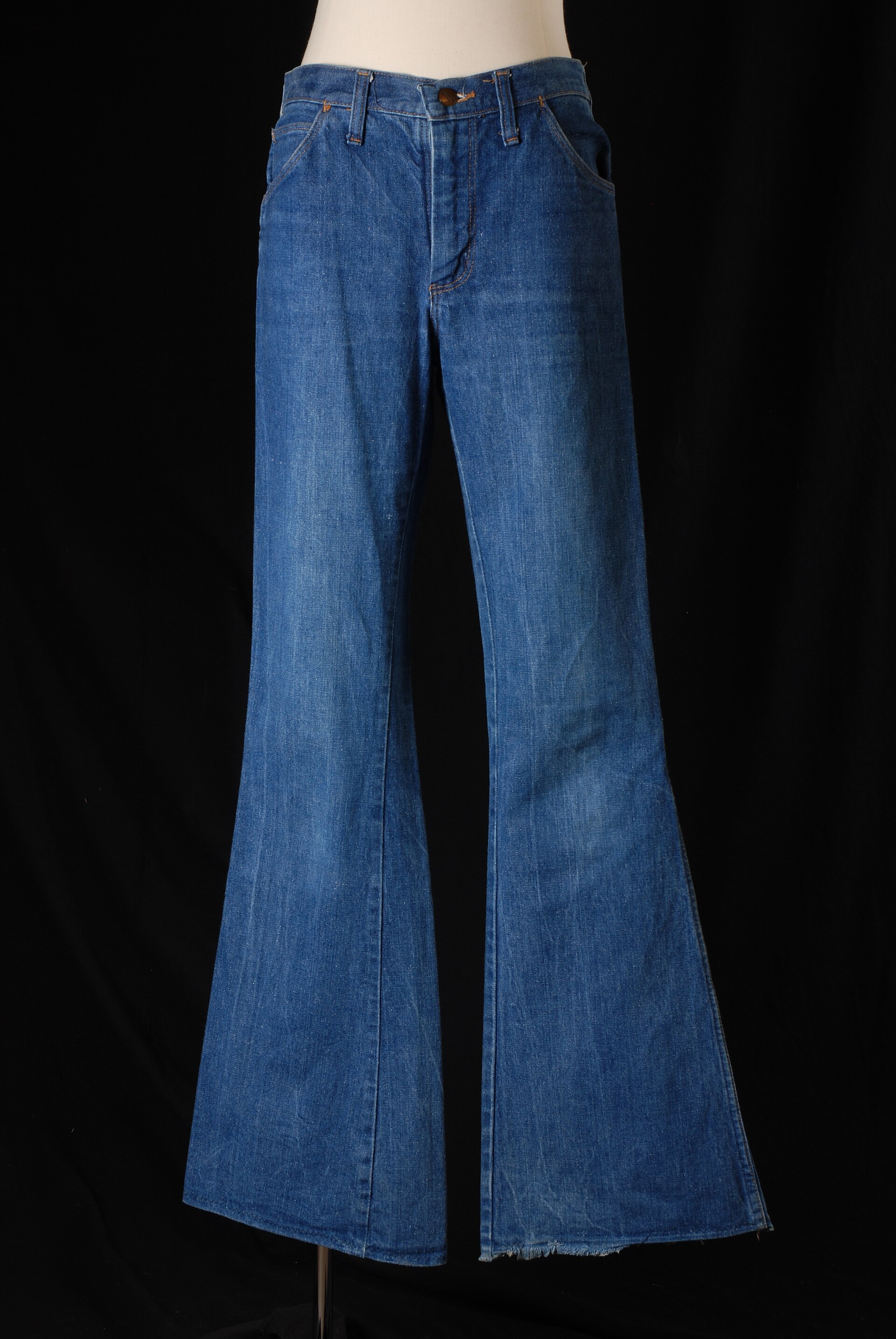
Read the Wrinkle Direction First
Men's flare jeans crotch bunching can appear even when the waistband closes comfortably. Look first at crotch depth and curve, front and back rise, seat, hip, and thigh proportions—not the flare below the knee.
Start with the direction of the wrinkles. The Self Employed Tailor handbook identifies wrinkles pulling upward from the crotch as a tight, high crotch. Wrinkles running downward indicate a low, loose crotch. That distinction changes the buying decision: more crotch length is not automatically the answer, and simply choosing a larger waist may move the problem without correcting the curve.
The handbook says the back crotch seam should be longer and more deeply curved than the front, with one inch of crotch ease. These are fit-reading principles, not universal ready-to-wear measurements.
Match Rise to the Intended Waist Position
Ask for front and back rise separately, then confirm the intended waistband position. One men's custom-jeans source defines low rise as 7-9 inches, mid rise as 9.5-11 inches, high rise as 11.5-13+ inches, and drop rise as 13+ inches.
Those ranges classify rises; they do not guarantee fit. Compare the listed rise with a well-fitting pair measured the same way, and wear the product at its intended waistband position.
Retail labels are insufficient: Levi's size-32 517 lists an 11 1/2-inch front rise and slim seat and thigh, while the size-32 Strong Guy lists a 12.5-inch front rise, 15.5-inch back rise, and fuller seat and thigh.
Check Seat, Thigh, and Seated Crotch Depth
A closed waistband does not establish enough room through the seat or upper thigh. New Mexico State University's pattern chart allows 2 inches of ease at the fullest hip, 1 inch at the fullest thigh, and 1/2-3/4 inch each for seated crotch depth and front and back crotch length.
Measure a well-fitting pair at the seller's stated points. The NMSU method records front and back crotch length separately and measures crotch depth while seated. If back rise, thigh width, or the method is omitted, mark it (not visible) and ask before ordering.
The size-32 Strong Guy discloses a 34-inch garment waist, 13-inch upper thigh, 12.5-inch front rise, 15.5-inch back rise, and +/- 0.5-inch tolerance. Account for that tolerance near your fit limit.
Separate Stretch From Growth and Recovery
Fiber content cannot show whether the crotch will retain its shape. Levi's 517 is 99% cotton and 1% elastane; the Strong Guy is 98% cotton and 2% elastane. Neither percentage supplies test results for stretch, growth, or recovery.
ASTM D3107-26 treats fabric stretch, growth, and recovery as distinct measurable properties after specified tension and extension. Fiber percentage alone cannot substitute for those results.
Ask whether recovery or growth testing is available. If only fiber percentage or the word stretch appears, recovery is (not visible). During a return-safe indoor fitting, sit, stand, and walk, then check whether folds relax.
Use Fit Reviews and Return Terms Together
A star average does not answer a crotch-fit question. Levi's 517 displayed 4.1 out of 5 stars from 1,677 reviews and a True to size label. Search reviews for rise, seat, thigh, sitting, pulling, pouching, and body proportions.
Baymard reports that 33% of benchmarked apparel and accessories sites do not aggregate review fit information. Prioritize a fit subscore, relevant filters, and seated photos; if seated-fit evidence is absent, mark it (not visible).
Read return terms before testing. Levi's example allows 30 days from delivery and requires items to be unworn, in original condition, with tags attached. Final-sale exclusions, exchange limits, and shipping costs vary, so verify the seller, country, item, and sale status.
Make the Buying Decision From Published Specs
Before checkout, match waist position, front and back rise, waist, seat or hip, upper thigh, fabric, recovery evidence, tolerance, fit reviews, and returns against a well-fitting pair and your seated crotch depth. Never guess a missing measurement.
Choose published proportions that match the intended waist position and a return policy that permits a careful fit check. If key measurements remain (not visible), request them or choose a better-documented listing.
Frequently asked questions
Why do men's flare jeans bunch at the crotch when the waist fits?
The evidence points to crotch depth or curve, rise, seat, hip, and thigh proportions. No source in the pack shows that flare shape alone causes bunching.
What do upward wrinkles from the crotch mean?
The tailoring handbook identifies upward wrinkles as a tight, high crotch. Downward wrinkles indicate a low, loose crotch.
Should front and back rise be the same?
No. The back crotch needs a longer, deeper curve than the front, and buyers should compare front and back rise separately.
Does more elastane prevent crotch bunching?
That cannot be concluded from fiber percentage. Stretch, fabric growth, and recovery are separate properties, and specific test results for the examined jeans are (not visible).
What photos or reviews help assess crotch fit?
Look for seated views and fit-specific comments about rise, seat, thigh, pulling, and pouching. If those are unavailable, treat seated-fit evidence as (not visible).
What return terms matter for a fit test?
Confirm the return window, unworn-condition rule, tag requirement, final-sale exclusion, exchange limit, and return-shipping cost for the exact retailer and country.
Sources
- Self Employed Tailor Participant Handbook
- Making Perfect Pants
- Four Basic Rises For Men - The Key to Better Fitting Custom Jeans
- 517 Bootcut Men's Jeans
- 12.5oz Greencast Stretch Selvedge - Strong Guy
- D3107-26 Standard Test Methods for Stretch Properties of Fabrics Woven from Stretch Yarns
- Apparel & Accessories Sites: Always Provide an Aggregate Fit Subscore in the Reviews
- How to Return and Exchange Items You've Ordered