
Guide
Men's Godet Insert Flare Jeans: Buyer Checklist
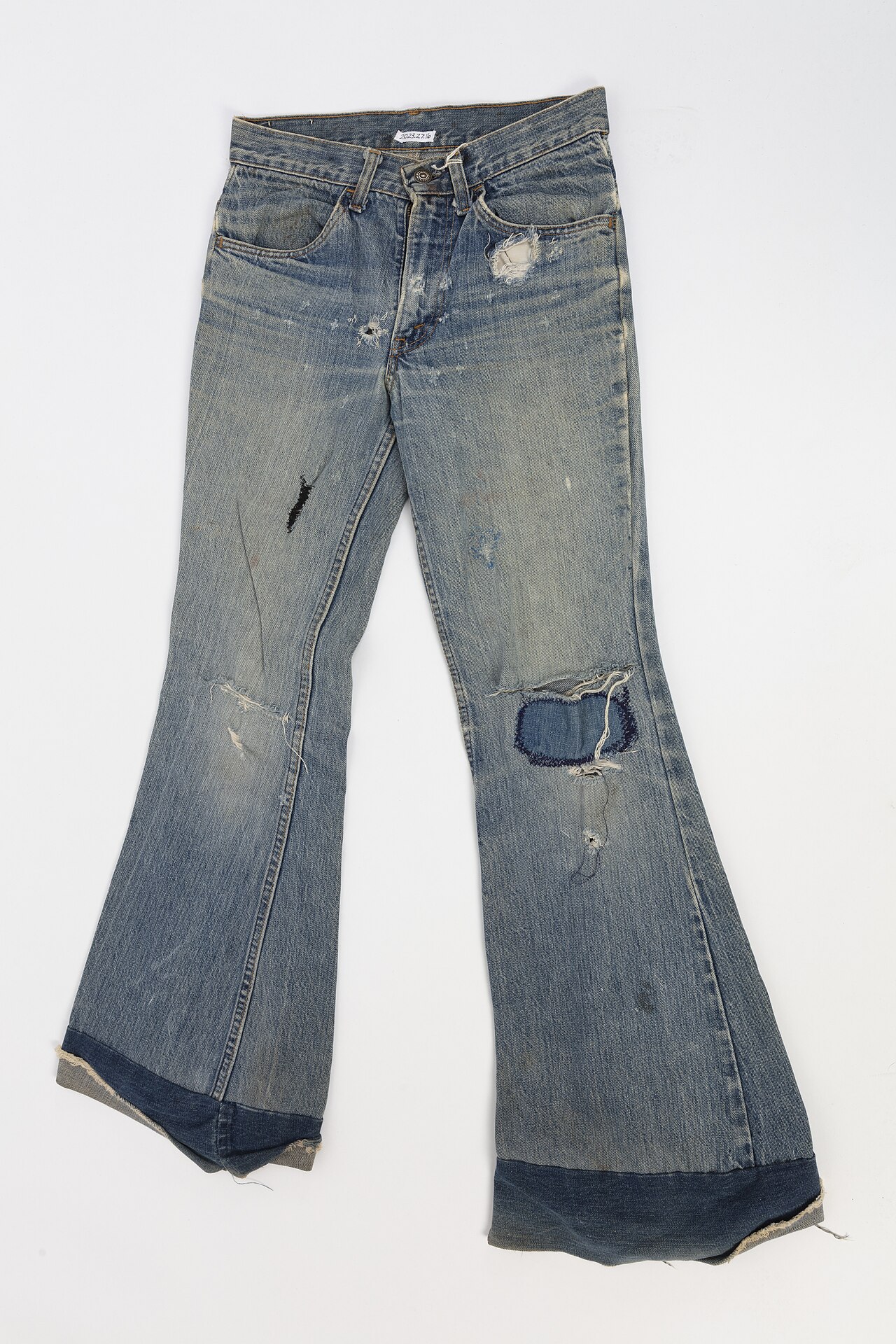
Judge the Full Shape and Panel Line
Published by WBestWind, a men's flare and bell bottom denim brand. Buyers comparing men's godet insert flare jeans often need to judge whether a visible side-seam insert suits their preferred silhouette.
Outer- and inner-seam inserts, raw edges, and openings made to fit over winter shoes are design options, not universal fit rules.
A FW24/25 denim report described fitted jeans with a subtle bottom flare and repurposed jeans cut and patched into new volume. Treat panels and stitching as design information, then judge fit separately.
Confirm Godet Position and Start Point
A godet is a triangular insert that adds flare and sweep at the hem. One Threads Magazine example places its top point around knee level. A higher point affects more of the lower leg; a lower point confines added volume closer to the hem.
Identify whether the insert follows an outer, inner, or other seam. No source establishes either placement as universally more masculine or feminine. Judge the panel line and flare direction together in flat-lay and walking views.
Read Insert Width, Knee, and Hem Together
Insert width controls added sweep, but no universal width, knee, hem opening, or knee-to-hem ratio applies. The Threads Magazine example says the curved edge can be widened or narrowed, so request dimensions.
Request start height, knee width, hem opening, and inseam. ASOS described one stretch flare as loose at the knees and flaring over shoes, while rigid bootcut denim pooled over boots. These dimensions work together.
Vogue described bootcut as a middle ground between baggy and skinny. Decide whether you want that subtle transition or a clearly triangular godet statement.
Inspect the Apex and Raw Edges
Inspect the godet point closely. The Fabrics-Store tutorial places it where the original seam ends, sews each side separately, and uses 1–1.5 mm stitches near the point for about one inch.
That tutorial serges or zigzags vertical raw edges before assembly. Another example uses 1/2-inch long-edge seam allowances and a 1-inch hem allowance. These are examples, not universal specifications.
Ask for an inside photo. Check both long edges, the apex, and the hem treatment. Record absent construction details as (not visible).
Separate Raw Fraying From Structural Risk
Cosmetic fraying is exposed fringe used as a visible finish. In the r/malefashionadvice discussion, one alteration example was an outer-seam notch deliberately left to fray. That shows intent, not a safe fraying rate or damage threshold.
Stabilization is separate from the visible effect. The Fabrics-Store tutorial finishes vertical raw edges with a serger or small zigzag stitch to prevent fraying. It uses 1–1.5 mm stitches for about an inch near the godet point.
Use those methods as inspection prompts, not universal specifications. Look behind the fringe for a finished edge, then inspect the cut endpoint and apex. If any area is obscured, record it as (not visible) rather than assuming durability.
The pack does not define when fringe becomes structural damage or validate these jeans' durability. Ask for an inside photo; visible distressing does not show how the seam is secured.
Test Shoe Coverage and the Final Silhouette
Use your intended footwear to choose length. One alteration helped jeans fit over Merrell Moabs, while ASOS described flares opening over shoes and rigid bootcut denim pooling over boots. No single break applies.
Height, inseam, shoe shape, and insert geometry change coverage. Check standing and walking views with your shoes. The hem should clear the floor and both legs should hang evenly.
Before checkout or alteration, confirm placement, dimensions, inside finishing, raw-edge treatment, care, and return terms. Mark unavailable critical details as (not visible).
Frequently asked questions
How do side-seam and inseam godets affect the look?
No sourced universal rule says so. Compare the panel line and complete silhouette from several angles.
Where should a godet start on men's flare jeans?
One construction example starts around knee level, but no universal ideal is supported. Confirm the actual start height.
How wide should the insert be?
There is no universal ideal. Compare insert width with knee width, hem opening, inseam, and your preferred flare strength.
What stitching should I inspect at the godet point?
One tutorial uses 1-1.5 mm stitches near the point for about one inch. Inspect for secure, flat stitching and no hole at the apex.
What should I check on a raw-cut denim godet?
The pack gives no reliable rate or damage threshold. Ask how the cut and insert edges are stabilized.
How much should mens flare jeans cover my shoes?
No universal amount is supported. Test your inseam and godet shape with the shoes you will actually wear.