
Guide
men's panelled flared jeans high quality checks
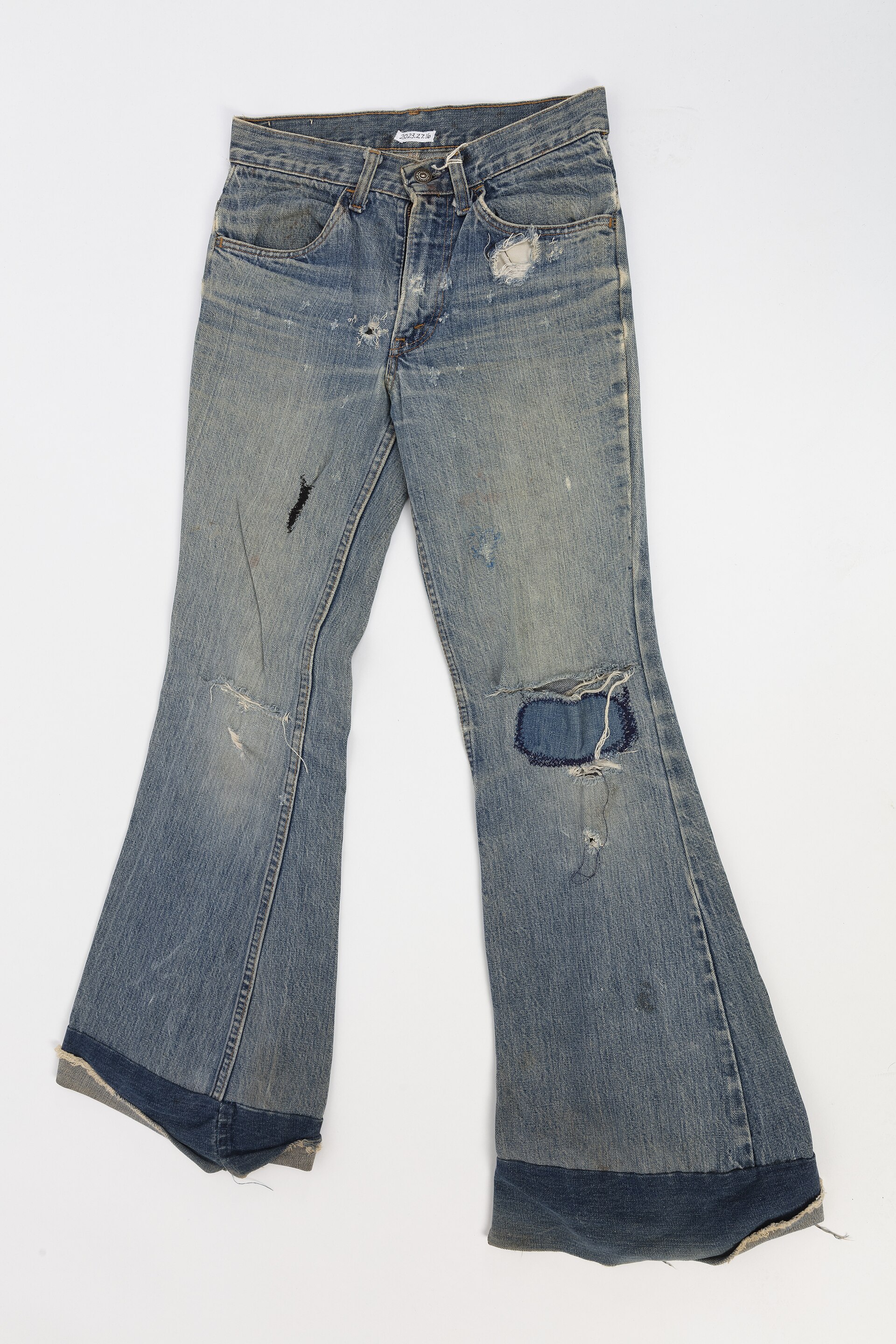
Start With The Panel Question
The buyer problem is specific: someone wants men's panelled flared jeans high quality, while the public discussion asks whether the flare is real or only created by panelling.
Do not buy from one front photo. Ask whether panels add width, decorate a normal leg, or only pull the eye outward. A sewing tutorial defines bell-bottom pants as flared from knee to ankle and shows added panels creating lower-leg spread.
Its examples include a 10.5-inch insert with a 4-inch base for subtle flare and a 13-inch insert with an 8-inch width for more spread, plus 1/2 inch seam allowance and 2 inches for the hem. These are not universal standards.
Verify Real Flare With Measurements
For men's flare jeans, ask for knee and leg-opening measurements in your size. If the opening is barely wider than the knee, the jean may read bootcut. If the listing gives no knee, opening, rise, or inseam, those specs are (not visible).
Use known men's products as anchors, not rules. Levi's 517 size 32 lists 11 1/2-inch front rise, 17 1/4-inch knee, and 18 1/4-inch leg opening. Wrangler 0945 lists high rise, 18 1/2-inch opening, 100% cotton heavyweight denim, 14.75 oz. weight, and no stretch.
A panelled pair should disclose where it is slim, where it widens, and hem size. If the seller only says retro, stacked, flared, or panelled, the shape is under-specified.
Judge Denim Weight And Fabric Detail
High quality cannot be reduced to one fabric weight. The evidence pack does not support a universal minimum for men's panelled flared jeans. It supports asking for enough textile detail to judge structure, drape, and durability expectations.
CottonWorks says finished denim ranges from 3.5 to 16.5 ounces per square yard, while trousers, jeans, and jackets tend to use 8 to 16.5 ounces. It also lists 3 X 1, 2 X 1, 2 X 2, and broken twills.
A strong product page should say more than premium denim. Look for fabric weight, fiber content, stretch status, weave detail, and care instructions.
Inspect Seams, Wash, And Stretch
Panels create extra seams, so check whether panel fabric matches the main leg in color, weight, grain direction, and wash intensity. The evidence does not prove panel seams alone mean better construction.
Wash matters because panels can expose mismatched fading. CottonWorks notes that synthetic indigo dyestuff accounts for essentially 100% of denim products, but separately cut pieces may still fade differently. Ask for side, back, hem, and close-up photos.
Stretch deserves its own check. ASTM D3107 covers stretch, growth, and recovery for woven fabrics made partly or wholly from stretch yarns, and is intended for high stretch greater than 12 percent.
Read Supplier And Retail Claims Carefully
Current supply-side listings show availability, not retail quality. Alibaba's flare-jeans manufacturer page says it identified 30 custom flare jeans manufacturers, primarily in Guangdong, China, updated August 25, 2026. Listed examples include $12.99 to $23 price ranges, MOQs of 50 to 100, and one supplier with a 4.9/5.0 rating, 72% reorder, and 99.3% on-time.
Use those numbers only as supply context. A low unit price does not prove strong fabric, accurate grading, clean panel alignment, or buyer-friendly returns. For D2C shoppers, better evidence is the actual listing: measurements, fabric, photos, delivery timing, and returns.
Control Return And Delivery Risk
Panelled mens flare jeans are higher-risk online because fit, flare, and seam placement are hard to confirm from one image. Save the product page, size chart, return policy, shipping estimate, and seller measurement messages.
The FTC says that if sellers do not give a shipping time, they must ship within 30 days. If delayed, the seller must offer the choice to accept the delay or cancel for a full refund. If the seller does not ship, it has to give a full refund, not store credit or a gift card.
For credit-card billing errors, the FTC says disputes must be sent in writing within 60 days of the first statement with the error. The issuer must acknowledge within 30 days and resolve within two billing cycles, but not more than 90 days.
Frequently asked questions
How can I tell if panelled flare jeans are truly flared?
Ask for knee and leg-opening measurements in your size. Photos and panel seams can mislead.
Do panels mean men's flare jeans are higher quality?
Not by themselves. Panels can create or accentuate flare, but quality still depends on fabric, alignment, stitch work, and fit specs.
What denim weight should I look for?
No universal minimum was found. CottonWorks says jeans, trousers, and jackets tend to use 8 to 16.5 ounces per square yard.
Are stretch mens flare jeans risky?
They can be if recovery is unclear. ASTM D3107 covers stretch, growth, and recovery for woven fabrics with high stretch greater than 12 percent.
Should I trust low wholesale flare-jean prices?
Use them only as supply context. Retail quality still needs fabric, construction, measurement, and return evidence.
What should I save before ordering flare jeans men buy online?
Save the listing, size chart, shipping promise, return rules, and seller messages. FTC timing rules do not replace a fit return policy.
Sources
- Does anyone know where to find flared jeans just like this one but also high quality?
- Flare Jeans Manufacturers Custom
- How to Make Bell Bottom Jeans or Flare Pants Sewing Tutorial
- Denim Basics
- 517 Bootcut Men's Jeans - Medium Wash
- Wrangler Cowboy Cut Boot Jean Rigid - Regular Fit
- ASTM D3107-03 - Standard Test Methods for Stretch Properties of Fabrics Woven from Stretch Yarns
- What To Do if You're Billed for Things You Never Got, or You Get Unordered Products