
Guide
Vintage Flare Jeans Buying Guide for Men
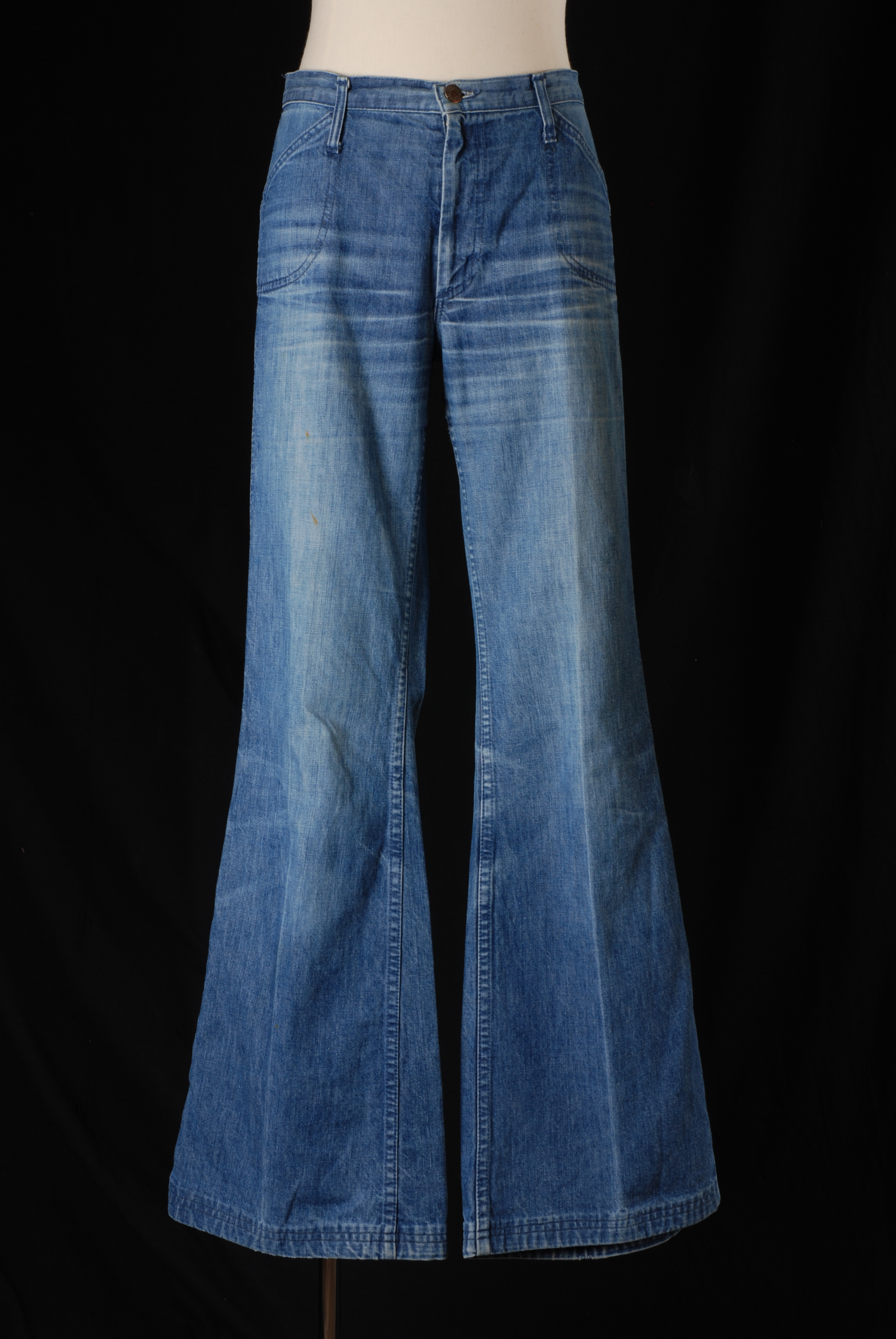
Start With the Buyer Question
A vintage flare jeans buying guide for men should help you decide whether a pair is wearable, correctly described, and worth the risk. Strong listings give real measurements, label photos, fabric and hem details, and close images of key wear zones.
Secondhand denim is no longer a fringe search. ThredUp reported that the U.S. secondhand apparel market grew 14% in 2024 and online resale grew 23%. The RealReal reported nearly 30% more members searched for vintage in 2025 than the prior year, while 47% considered resale value before buying new.
Those figures show demand, not a guarantee that any pair of retro denim men find online will hold value. Treat value as conditional on era evidence, condition, fit, alterations, and usable measurements.
Check Era Cues Without Overclaiming
For 70s style jeans for men, start with the silhouette, then test supporting details. The Museum at FIT places bellbottom, embroidered, and patched denim within 1960s hippie counterculture, and dates one Levi Strauss & Co. hand-embroidered denim example to circa 1969. That supports the look, not authenticity.
Levi Strauss & Co. gives specific checkpoints. By fall 1969, LS&Co. introduced bell bottom and boot cut fits in its Orange Tab line. The 646 jean was originally called Nuvo Flares and used a poly-cotton blend; the fall 1969 catalog described the STA-PREST Saddleman 517-07 as full from the knee for the boot wearer.
Use label clues carefully. Levi's states that Orange Tab ran from 1969 to 1999 and was reintroduced in 2017. It also says the LEVI'S logo used uppercase E before 1971 and that a single-stitch inseam marks pre-1980 vintage 501 jeans. These are clues, not a universal authentication system.
Measure Before You Believe the Tag
Tagged size is not enough for used 70s flare jeans men are buying secondhand. Ask for flat measurements or measure your reference pair the same way. Levi's fit guidance says to lay jeans flat, measure the entire waistband, and double it. It also says to measure inseam from crotch seam to ankle hem.
Rise changes the look. Levi's guide places high rise above 10 inches, mid-rise between 8 and 9.5 inches, and low rise below 8 inches. For flares, rise affects the torso and leg line. If the rise number is absent, write (not visible).
Also ask for thigh, knee, and hem opening measurements. The evidence pack does not provide a universal numeric boundary between bootcut, flare, and bell-bottom, so the seller's label should not be your only guide. Compare the knee-to-hem change and shoe break.
Read Wear Like a Material Check
Natural-looking wear is useful, but fading is not proof of age. CottonWorks says common natural wear-line locations include the lap area, front thighs, back of knees, and bottom of pant legs. Ask for those zones plus crotch, seat, seams, and hem edge.
Factory finishing can imitate time. CottonWorks identifies alpha-amylase as commonly used for desizing starch and cellulase for abrasion and biopolishing. It also explains that cellulase biopolishes cotton by hydrolyzing the fiber surface, causing fiber loss. Heavy whiskers or soft abrasion are clues to inspect, not date stamps.
The Museum at FIT notes that stonewashing and acid-washing became standard across the industry during the 1980s. If a seller calls a heavily washed pair original 1970s, check whether the wash story matches the label, construction, and fiber content.
Inspect Hems, Alterations, and Resale
Flares are sensitive to hem changes because the opening is part of the design. A shortened pair may lose original bottom abrasion, and a poor hem can make the flare look abrupt. Ask whether the inseam is original, chainstitched, reattached, or resewn.
Denimrepair.com lists a shorten-hem service starting from $25.00 and offers authentic chainstitch or reattachment of the original hem. The shop recommends chainstitch hemming for raw, unwashed, or dark jeans and original-hem replacement for lighter or distressed jeans.
Resale value should be checked, but not invented. The RealReal reported Fair Condition sales up 32% year over year, driven by new buyers up 40%. It also reported a 963% 24-hour search increase for Celine Flare Jeans after Kendrick Lamar's Celine Super Bowl jeans. Those signals support interest, but model-specific resale value by brand, size, condition, and alteration status is (not visible).
Frequently asked questions
How can I tell if men's vintage flare jeans are really from the 1970s?
Use multiple clues: silhouette, label, tab, care tag, fabric, stitching, and model language. Levi's Orange Tab, Big E, 646, and 517 details can help on Levi's pairs, but a universal date-code rule is (not visible).
Are bellbottoms, bootcuts, and flares the same thing?
No universal numeric cutoff appears in the evidence pack. Use the seller's term as a starting label, then compare knee width, hem opening, rise, inseam, and shoe break.
Should I trust faded thighs and whiskers as proof of age?
No. CottonWorks documents finishing methods that can create abrasion and biopolishing effects, so fading should be checked against natural wear zones and construction.
What measurements matter most before buying secondhand flares?
Ask for flat waist doubled, inseam from crotch seam to hem, and rise. For flares, thigh, knee, and hem opening also matter because shape depends on the knee-to-hem change.
Does hemming reduce resale value?
A reliable percentage is (not visible). Check whether the original hem was preserved, whether chainstitch was used, and whether the shortened length keeps the flare shape.
Sources
- The RealReal's 2025 Resale Report
- ThredUp's 13th annual Resale Report sizes the secondhand market and explores trends driving growth
- Levi's Frequently Asked Questions
- Peace, Love & Bell Bottoms: Celebrating 50 Years of an Iconic Style
- Levi's Fit Guide: How to Measure Jeans
- Denim Finishing
- Denim: Fashion's Frontier
- Shorten Hem, Chainstitch or Replace Original Hem